Gelderland (Dutch pronunciation: [ˈɣɛldərlɑnt](listen), also Guelders in English) is a province of the Netherlands, located in the central eastern part of the country. With a land area of nearly 5,000 km2, it is the largest province of the Netherlands and shares borders with six other provinces and Germany.
The capital is Arnhem. However, both Nijmegen and Apeldoorn are larger municipalities, Nijmegen being the largest with nearly 170,000 inhabitants. Other major regional centres in Gelderland are Ede, Doetinchem, Zutphen, Tiel, Wageningen, Zevenaar, Winterswijk and Harderwijk. Gelderland had a population of just over two million in 2015.[2]
Contents
1History
2Geography
2.1Municipalities
2.2Abolished municipalities
3Cultural references
4References
5External links
History
Historically, the province dates from states of the Holy Roman Empire and takes its name from the nearby German city of Geldern. According to the Wichard saga, the city was named by the Lords of Pont who fought and killed a dragon in 878 AD. They named the town they founded after the death rattle of the dragon: "Gelre!"[3]
The County of Guelders arose out of the Frankish pagus Hamaland in the 11th century around castles near Roermond and Geldern. The counts of Gelre acquired the Betuwe and Veluwe regions and, through marriage, the County of Zutphen. Thus the counts of Guelders laid the foundation for a territorial power that, through control of the Rhine, Waal, Meuse and IJssel rivers, was to play an important role in the later Middle Ages. The geographical position of their territory dictated the external policy of the counts during the following centuries; they were committed to the interests of the Holy Roman Empire and to expansion south and west.
Further enlarged by the acquisition of the imperial city of Nijmegen in the 13th century, the countship was raised to a duchy in 1339 by the Holy Roman Emperor, Louis IV. After 1379, the duchy was ruled from Jülich and by the counts of Egmond and Cleves. The duchy resisted Burgundian domination, but William, Duke of Jülich-Cleves-Berg was forced to cede it to Charles V in 1543, after which it formed part of the Burgundian-Habsburg hereditary lands.[4]
The duchy revolted with the rest of the Netherlands against Philip II of Spain and joined the Union of Utrecht (1579). After the deposition of Philip II, its sovereignty was vested in the States of Gelderland, and the princes of Orange were stadtholders. In 1672, the province was temporarily occupied by Louis XIV and, in 1713, the southeastern part including the ducal capital of Geldern fell to Prussia. Part of the Batavian Republic (1795–1806), of Louis Bonaparte’s Kingdom of Holland (1806–10), and of the French Empire (1810–13), Gelderland became a province of the Kingdom of the Netherlands in 1815.[4]
During the Second World War, it saw heavy fighting between Allied Paratroopers, British XXX Corps and the German II SS Panzer Corps, at the Battle of Arnhem.
Geography
Gelderland can roughly be divided into four geographical regions: the Veluwe in the north, the Rivierenland including the Betuwe in the southwest, the Achterhoek (literally meaning the "back corner") or Graafschap (which originally means earldom or county) in the east and the city-region of Arnhem and Nijmegen in the centre-south.
Clash Royale CLAN TAG #URR8PPP Ethnic group For the term for the region and its historical, geographical, demographic and political issues, see Northern Epirus. Northern Epirotes Βορειοηπειρώτες Total population est. over 215,000 (Greeks of southern Albania/Northern Epirus) Greeks of southern Albania/Northern Epirus (including those of ancestral descent) Regions with significant populations Albania, Greece, United States, Australia Albania and Greece est. over 200,000 [1] [2] [3] United States of America over 15,000 (est. 1965) [4] Languages Greek also Albanian and English depending on the residing place Religion Orthodox Christianity The Greeks of Albania are ethnic Greeks who live in or originate from areas within modern Albania. They are mostly concentrated in the south of the country, in the areas of the northern part of the historical region of Epirus, in parts of Vlorë County, [5] Gjirokastër,...
Clash Royale CLAN TAG #URR8PPP Ultra Electronics Holdings plc Type Public Traded as LSE: ULE Industry Defence, security, transport and energy Founded 1920 Headquarters Greenford, London, UK Area served Worldwide Key people Douglas Caster, Chairman Simon Pryce Chief Executive Products C4ISTAR Cyber security Sonar systems Civil transport and energy systems and equipment Equipment for defence and security applications Military aircraft equipment Civil aircraft equipment Ice Protection Revenue £775.4 million (2017) [1] Operating income £61.5 million (2017) [1] Net income £48.9 million (2017) [1] Number of employees 4,172 (2016) [1] Website www.ultra-electronics.com Ultra Electronics Holdings (LSE: ULE) is a British company serving the defence, security, transport and energy industries. It is listed on the London Stock Exchange and is a constituent of the FTSE 250 Index. Contents 1 History 2 Operations 3 Ultra subsidiary companies 4 See also 5 Reference...
Clash Royale CLAN TAG #URR8PPP This article is about a control panel placed in the front of the car. For other uses, see Dashboard (disambiguation). The dashboard of a Bentley Continental GTC car A dashboard (also called dash , instrument panel (IP) , or fascia ) is a control panel usually located directly ahead of a vehicle's driver, displaying instrumentation and controls for the vehicle's operation. Contents 1 Etymology 2 Dashboard features 3 Padding and safety 4 Fashion in instrumentation 5 See also 6 References Etymology Horse-drawn carriage dashboard Originally, the word dashboard applied to a barrier of wood or leather fixed at the front of a horse-drawn carriage or sleigh to protect the driver from mud or other debris "dashed up" (thrown up) by the horses' hooves. [1] Commonly these boards did not perform any additional function other than providing a convenient handhold for ascending into the driver's seat, or a small clip with which to secu...

 Clash Royale CLAN TAG#URR8PPP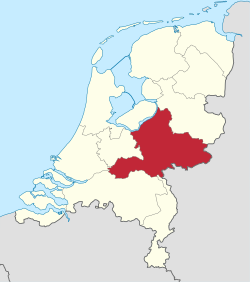


 listen), also Guelders in English) is a province of the Netherlands, located in the central eastern part of the country. With a land area of nearly 5,000 km2, it is the largest province of the Netherlands and shares borders with six other provinces and Germany.